
Walk into a 1920s bungalow or a Victorian rowhouse and the details announce themselves: tall baseboards, glass with a slight ripple, hardware with real heft. Then your eyes drop to the floor and land on a thin white grille from a big-box aisle, and the spell breaks. A custom vent cover is one of the smallest surfaces in a room, yet it is one of the easiest to get wrong.
Fortunately, a few specialist makers will build or supply covers that respect an older home’s character, including in sizes standard catalogs ignore. Below are three worth knowing. I picked focused specialists over giant retailers, because smaller shops tend to answer questions in person, quote odd sizes, and care about the look of the finished room.
What “Vintage” Should Mean for Your Vents
Before comparing shops, decide what your house actually calls for. Vintage covers fall into a few camps.
- Ornate and ceremonial: scrolls, vines and tracery found in Victorian and Edwardian homes.
- Geometric and restrained: the grid-and-pane patterns of Craftsman and Mission interiors.
- Warm and natural: solid wood grilles that echo plank floors and stair treads.
- Quiet and clean: simple slotted or louvered covers that let original woodwork and plaster take center stage.
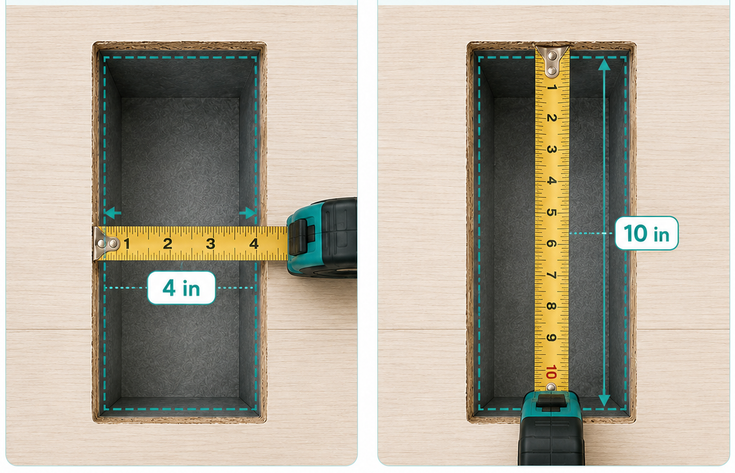
Whichever you choose, check four things. First, will the maker work to your duct opening rather than forcing a stock size? Second, is the material believable for the era, such as cast metal, brass or real wood? Third, can the finish sit comfortably beside your doorknobs, switch plates and light fixtures? Fourth, can you hold the product to a sensible standard of weight and airflow? And one rule beats all of them: measure the inside of the duct opening, never the old cover.
1. Airwinks
Airwinks is the most modern entry on this list, and that is the point. It is a specialist vent cover company, started with floor-matching vents and later expanded to wall and ceiling covers. It does not sell antique reproductions, so if you want brass scrollwork, look to the first two shops.
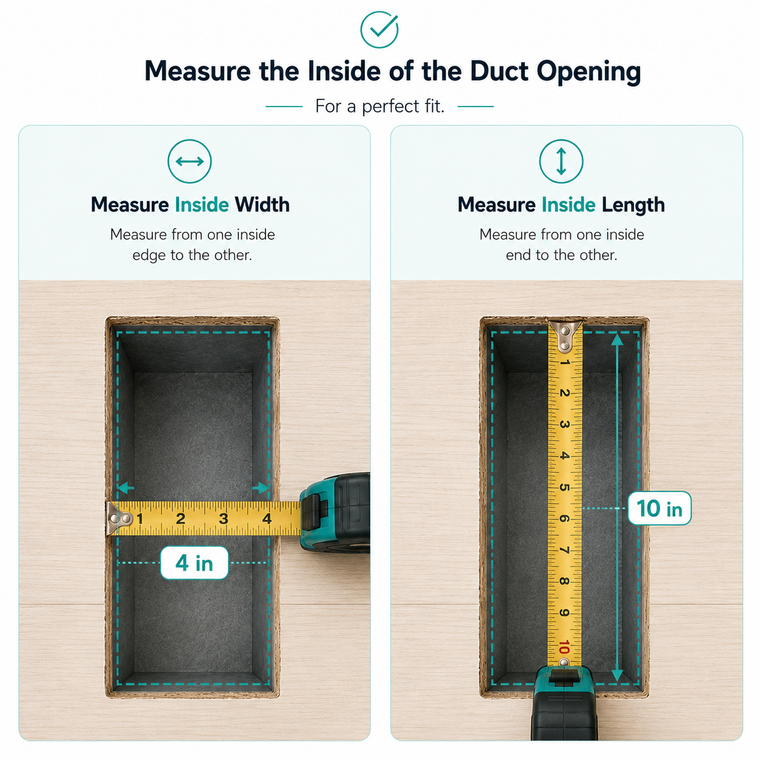
Where Airwinks earns its place is in older homes with awkward duct openings. Renovated period houses are famous for ductwork that fits no catalog. Its custom vents covers service starts with a request form: you send the inside opening dimensions, whether the vent is for a floor, wall or ceiling, the quantity, your preferred finish, and a photo or drawing. The team reviews the request for manufacturing feasibility, then sends a quote and lead time separately before you buy. Finishes are Sandtex white or Sandtex black, with black available on eligible floor designs only. Custom orders are final sale, so measure carefully.
The standard line is organized by surface and duct-opening size, with dozens of listed sizes. Its floor registers include a built-in airflow flap and a flooring-matching insert, which helps the vent visually recede into tile, hardwood, vinyl, laminate or carpet.
Best for: Restored homes where you want the woodwork, tile and hardware to be the stars and the vents to stay quiet. A matte black floor register can even echo old iron hardware without imitating ornament.
2. Pacific Register Company
Pacific Register, based in Oxnard, California, is a small-scale manufacturer built around antique reproduction registers and custom decorative vent covers. Work is made to customer specifications in the USA, in metal, wood, plaster and stone. That range of materials is unusual and gives you real freedom to match a period.
Its catalog leans into history. You will find a cast aluminum Victorian-pattern heat register, laser-cut wood grilles in white oak, and a floral custom metal cover called “Antique Flower,” available in aluminum, bronze, copper or steel. That last one is the kind of piece that makes a hallway feel designed rather than merely repaired.
3. All American Wood Register Co.
Based in Crystal Lake, Illinois, this company focuses on one material and does it well: solid wood. Its registers are milled from a single piece of wood, so there are no glued joints to loosen over the years. Trade coverage describes standard and custom sizes in more than sixty species, from oak and maple to exotic hardwoods, and flush-mount designs with grooved frames that accept the tongues of hardwood flooring. The effect is a register that reads as part of the floor instead of a hole cut into it.
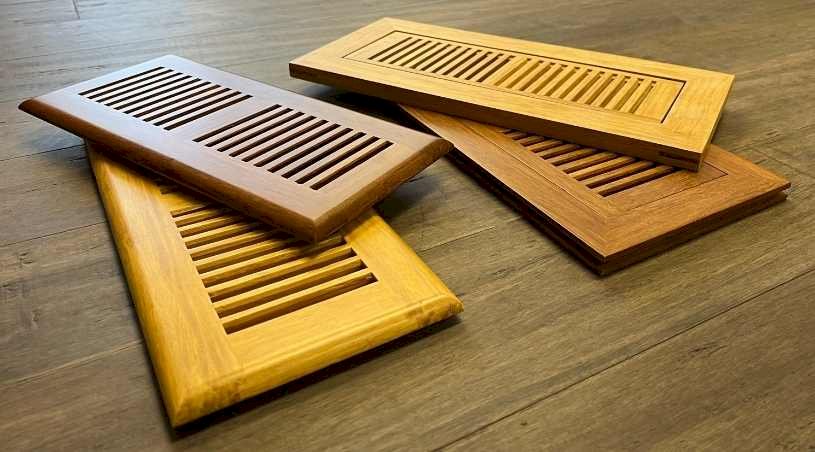
The company has also described shipping custom registers quickly, within about 48 hours, though you should confirm current lead times when you order.
How to Choose Among the Three
Think about what role each vent plays in the room. In a formal entry hall or parlor, an ornate cast or custom-cut metal piece becomes a feature, so Pacific Register makes sense. In a hardwood dining room, a stained wood register from All American disappears gracefully into the floor. For an unusual opening in a bathroom, hallway or ceiling, a made-to-fit cover from Airwinks keeps things tidy.
A few habits save money and frustration across all three.
- Measure twice. Remove the old cover and measure edge to edge inside the opening, width by length for floors and ceilings, width by height for walls.
- Photograph the opening. A picture of the surround helps any maker catch problems before production starts.
- Match metals and finishes deliberately. Mixing is fine if it looks intentional, but a lone shiny brass register among oil-rubbed bronze hardware will look like a mistake.
- Respect airflow. Heavily perforated or tightly patterned designs can restrict flow, so ask your HVAC contractor if your system is sensitive.
- Order a sample for expensive rooms. Finishes look different on a screen than on your floor in afternoon light.
Final Thoughts
Vent covers rarely make anyone’s inspiration board, yet they sit at eye level in a house’s circulation paths, and visitors notice when they are wrong. Whether you choose a patterned metal register from Pacific Register, a solid wood piece from All American Wood Register, or a clean made-to-fit cover from Airwinks, the principle is the same: choose a maker who works to your opening and respects your house’s era. Done well, the vents become a quiet part of the story your home already tells.